
DESTINATION · Rwanda
Volcanoes National ParkWildlife destination field guide
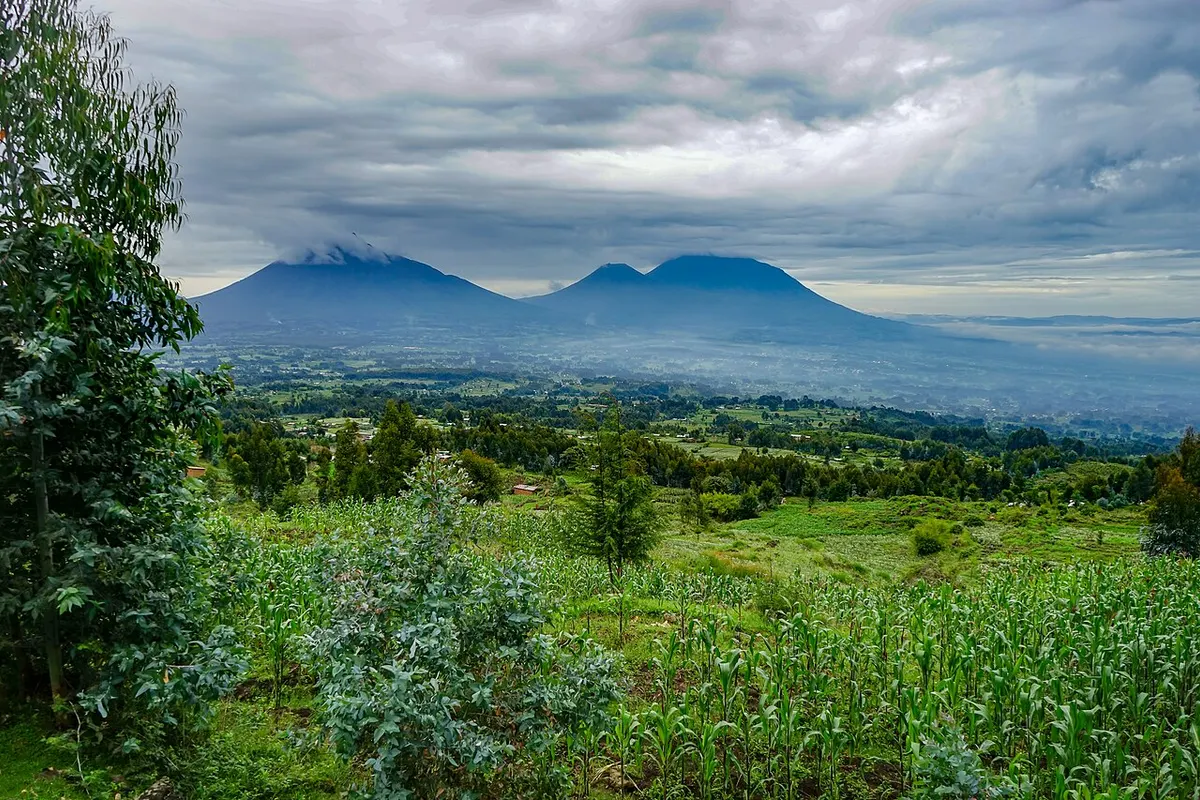
Volcanoes National Park covers the southern slopes of the Virunga volcanoes. Farmland rises quickly into bamboo, Hagenia forest and alpine grassland. Mountain gorilla families move through a continuous mountain system shared by Rwanda, Uganda and the Democratic Republic of the Congo, so their protection crosses national borders.
- Country or region
- Rwanda
- Observation window
- Jun-Sep / Dec-Feb
- Suggested stay
- 3-4 days
- Coordinates
- 1.47° S, 29.49° E
Start with the habitat
Volcanoes National Park covers the southern slopes of the Virunga volcanoes. Farmland rises quickly into bamboo, Hagenia forest and alpine grassland. Mountain gorilla families move through a continuous mountain system shared by Rwanda, Uganda and the Democratic Republic of the Congo, so their protection crosses national borders.
Altitude, volcanic soil, rain and mist create distinct vegetation bands. A gorilla trek opens a short window into one family's day. Veterinary care, ranger patrols, permit limits, habitat expansion and income for neighbouring communities continue long after that visit ends.
Best time to visit Volcanoes National Park
Drier trekking period
Rain is less frequent and trails are often firmer, although cloud forest weather can change without warning. Permits for popular dates are limited.
Short rains
Vegetation thickens and mud increases. The location of a gorilla family still determines the length and difficulty of each trek.
Shorter dry period
This is another common trekking window. Temperatures remain moderate, and weather on the volcanic slopes is still variable.
How to read a field day
Check in and report your health
Meet with the permit group, listen to the ranger briefing and withdraw if you are unwell.
Follow signs through the forest
Trackers read broken stems, nests and feeding signs. Keep the group together and never move ahead of the guide.
Leave the encounter in the forest
Exit when the current time limit ends. Do not use flash or imitate gorilla behaviour. Community visits can add context to the conservation work.
A practical route
- Allow time in Musanze to arrive, check equipment and rest before a strenuous mountain walk.
- Set aside one permitted gorilla day and prepare for different elevations, mud and waiting times.
- Use another day for natural history, a community programme or the volcanic landscape. Gorilla conservation extends well beyond the viewing period.
Before you leave
- Permit price, minimum age, health rules, viewing distance and time limits follow current Rwanda Development Board regulations.
- Carry a waterproof layer, long trousers, gloves, shoes with grip and light drinking water. A porter can be chosen according to your fitness and needs.
- Human respiratory illness can spread to great apes. Do not hide symptoms or insist on entering the forest when unwell.
Representative species
These species help explain the food web and habitat around Volcanoes National Park. An association in the catalog does not guarantee a sighting.
Sources and review
The sources below support the ecological background and access boundaries in this guide. Current weather, permits, roads and local notices still need a separate check before travel.
SafariWild reviewed this page on . To report an error, send the page URL and a verifiable source through the contact page.