
DESTINATION · Chile
Torres del Paine National ParkWildlife destination field guide
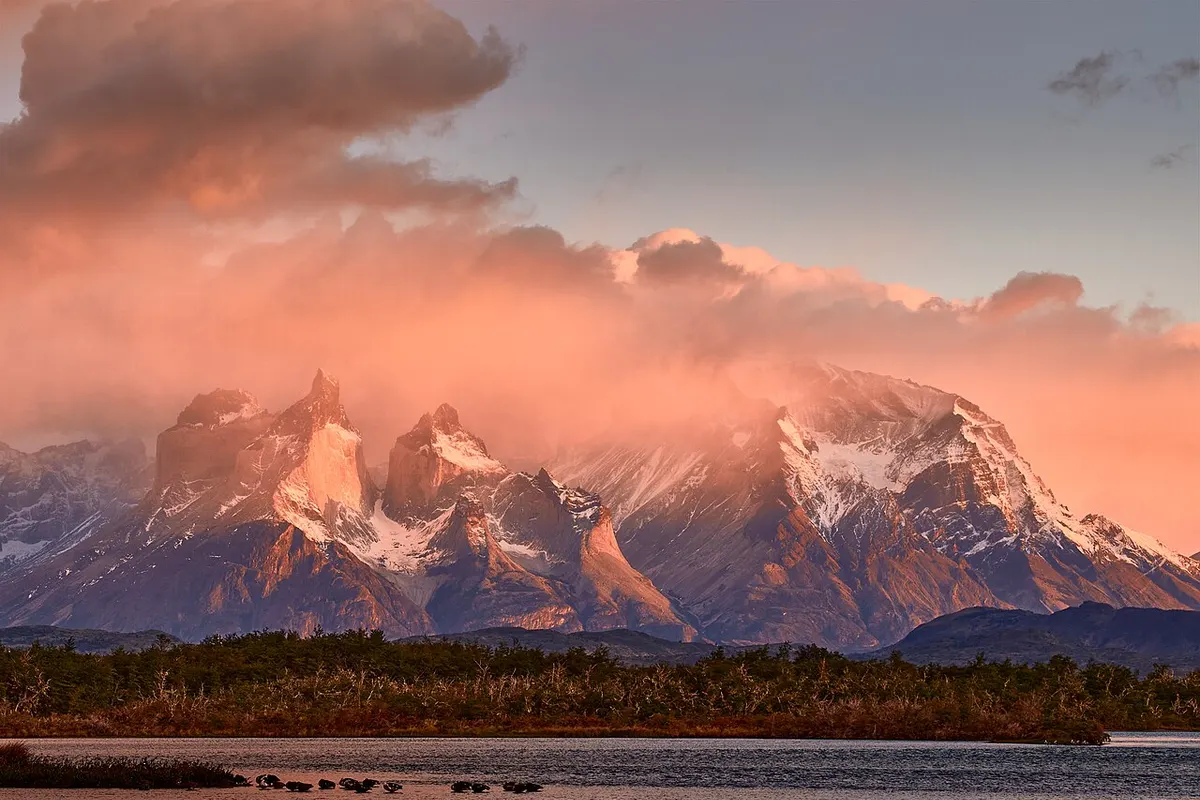
Torres del Paine brings Patagonian steppe, southern beech forest, glacial lakes and granite peaks into a compact area. Puma viewing depends on distance and patience. Guanaco herds, ambush cover along habitat edges and strong wind all affect when and where a cat may move.
- Country or region
- Chile
- Observation window
- Oct-Apr
- Suggested stay
- 4-7 days
- Coordinates
- 50.94° S, 73.41° W
Start with the habitat
Torres del Paine brings Patagonian steppe, southern beech forest, glacial lakes and granite peaks into a compact area. Puma viewing depends on distance and patience. Guanaco herds, ambush cover along habitat edges and strong wind all affect when and where a cat may move.
Open steppe gives guanacos food and a broad field of view, while scrub and rocky slopes give pumas cover. Southern beech forest, lake shore and glacier fronts support other wildlife. Ranches inside and outside the park form part of a wider puma range, where tolerance for predators and pressure away from trails affect individual animals.
Best time to visit Torres del Paine National Park
Late spring and young animals
Daylight increases quickly. Breeding birds and newborn guanacos add activity to the steppe, while weather still changes fast.
High summer to early autumn
Long days give more time outside, and visitor numbers fall into autumn. Strong wind and sudden weather remain possible in every month.
Low-traffic winter
Some services and routes are reduced. Snow and short daylight make travel harder, so current access and transport need careful checking.
How to read a field day
Read the guanacos
From official roads and trails, use binoculars to watch for fixed staring, alarm calls or a sudden run.
Read wind and shelter
Turn toward the peaks, lakes and southern beech forest, comparing how each habitat offers protection from strong wind.
Wait from one legal position
Pumas may become more active, but observers must stay on the route and leave according to current park rules.
A practical route
- Spend the first day learning the official entrances, roads, trails and weather before reacting to a current sighting.
- Use two dawn or dusk periods with a responsible local guide to observe the relationship between pumas and guanacos in open areas.
- Keep a day for glacial lakes or southern beech forest so the park is not reduced to one cat.
Before you leave
- Carry layered windproof and waterproof clothing, firm footwear and binoculars. Strong wind affects vehicles, walking and camera equipment.
- Observe only from official open areas. Do not leave the route, approach prey or block movement between a female and her young.
- Fire controls are strict. Entry bookings, access and operator rules follow current CONAF notices.
Representative species
These species help explain the food web and habitat around Torres del Paine National Park. An association in the catalog does not guarantee a sighting.
Sources and review
The sources below support the ecological background and access boundaries in this guide. Current weather, permits, roads and local notices still need a separate check before travel.
SafariWild reviewed this page on . To report an error, send the page URL and a verifiable source through the contact page.