
DESTINATION · Tanzania
Ngorongoro Conservation AreaWildlife destination field guide
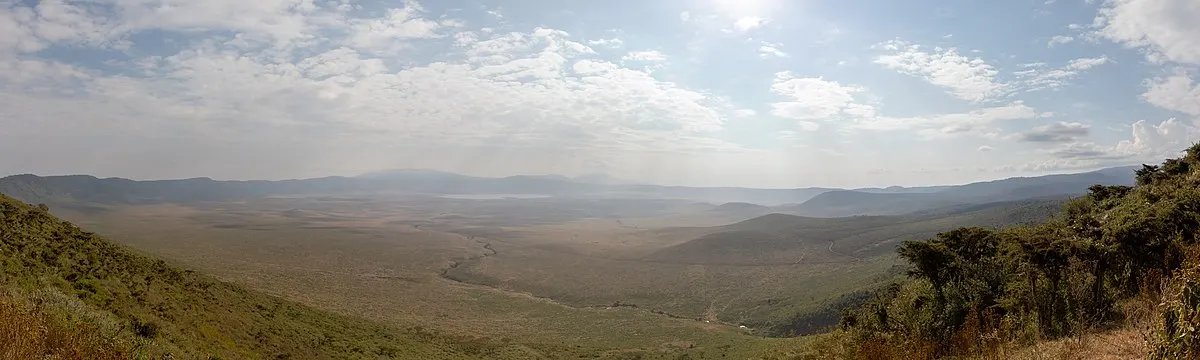
Ngorongoro is a multiple-use conservation area rather than a single crater. Highland forest, the caldera floor, alkaline lakes and northern short-grass plains occur within the same protected landscape. Black rhinos, lion prides, hippos and large herbivores use the crater floor, while the northern plains connect with the wider Serengeti migration system.
- Country or region
- Tanzania
- Observation window
- Jan-Feb / Jun-Oct
- Suggested stay
- 3-5 days
- Coordinates
- 3.16° S, 35.59° E
Start with the habitat
Ngorongoro is a multiple-use conservation area rather than a single crater. Highland forest, the caldera floor, alkaline lakes and northern short-grass plains occur within the same protected landscape. Black rhinos, lion prides, hippos and large herbivores use the crater floor, while the northern plains connect with the wider Serengeti migration system.
The crater rim is high, wet and often misty. Forest catches moisture that feeds springs and wetlands below. Grassland, lake shore and marsh form a compact patchwork on the crater floor, while the short-grass plains beyond the highlands continue to support seasonal migration and pastoral use.
Best time to visit Ngorongoro Conservation Area
Calving on the northern plains
Rain turns the short-grass plains green, and migratory herds calve across the wider Serengeti-Ngorongoro system.
Dry-season viewing
Grass is shorter and visibility improves on the crater floor. Animals depend more on lakes, springs and wetland margins.
Long rains and highland mist
The highlands are green and the rim is often covered by cloud. Roads can be muddy, while birds and plant growth become more noticeable.
How to read a field day
Descend before the rush
Enter the crater floor early, scan at distance for black rhinos and avoid following a moving knot of vehicles.
Read the boundary between water and grass
Compare the species using lake shore, marsh, grassland and woodland edge instead of treating the day as a list of large mammals.
Return to the rim
Climb out before the required departure time and use the higher view to connect landform, water and animal distribution.
A practical route
- Use Karatu or the crater rim as a base, then give the crater floor a full morning and day.
- Add the highland forest or northern short-grass plains so the visit is not reduced to a single vehicle circuit.
- Local interpretation can explain pastoral traditions, migration corridors and the practical tension of a multiple-use conservation area.
Before you leave
- The rim is much colder than the crater floor. Carry warm and waterproof layers while preparing for strong sun below.
- Do not crowd black rhinos, lion prides or a kill. Never pressure a driver to leave the route, block another vehicle or use the horn.
- Migration and calving locations move with the rain. Check current grass and road conditions before departure.
Representative species
These species help explain the food web and habitat around Ngorongoro Conservation Area. An association in the catalog does not guarantee a sighting.
Sources and review
The sources below support the ecological background and access boundaries in this guide. Current weather, permits, roads and local notices still need a separate check before travel.
SafariWild reviewed this page on . To report an error, send the page URL and a verifiable source through the contact page.