
DESTINATION · United States
Katmai National Park and PreserveWildlife destination field guide
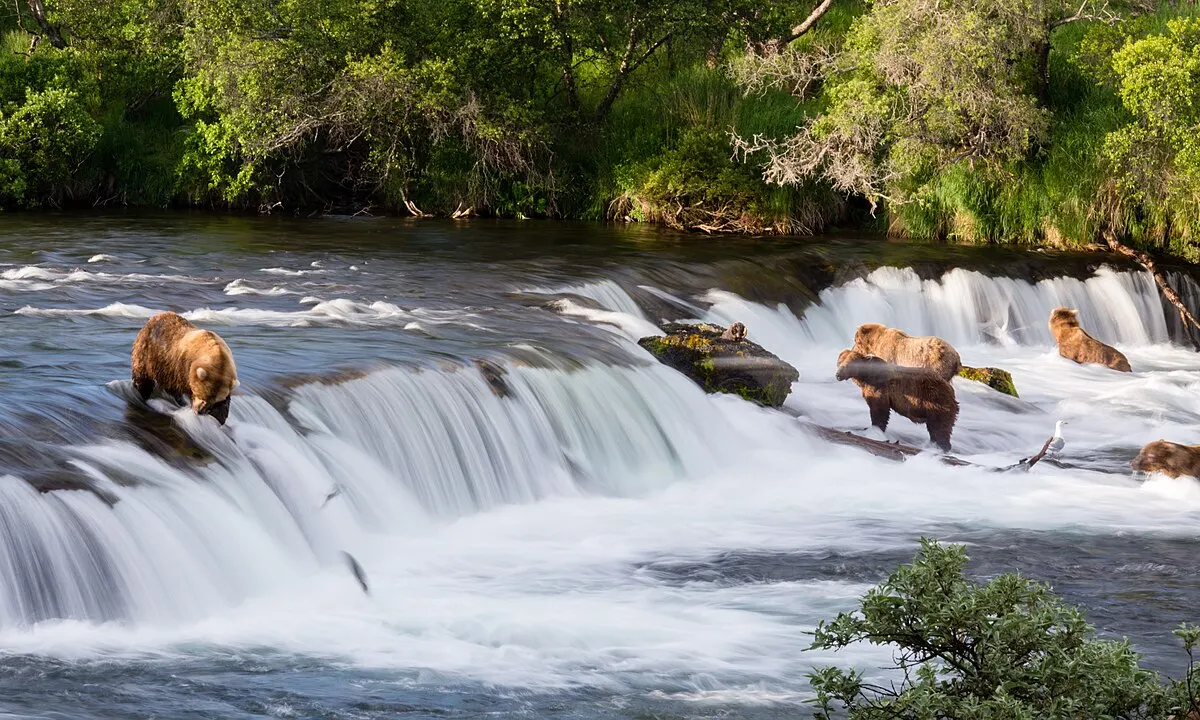
Katmai protects more than four million acres of volcanoes, tundra, coast and river habitat. About 2,200 brown bears live in this landscape. The Brooks River salmon run concentrates food and bears, requiring visitors to learn coexistence through platforms, distance rules and careful food storage.
- Country or region
- United States
- Observation window
- Jun-Sep
- Suggested stay
- 3-5 days
- Coordinates
- 58.55° N, 155.78° W
Start with the habitat
Katmai protects more than four million acres of volcanoes, tundra, coast and river habitat. About 2,200 brown bears live in this landscape. The Brooks River salmon run concentrates food and bears, requiring visitors to learn coexistence through platforms, distance rules and careful food storage.
Sockeye salmon return from the ocean to lakes and tributaries, carrying marine nutrients into bears, eagles and riverside plants. Volcanic ground, tundra berries, coastal grass and salmon rivers support the bears across the year. Brooks Falls is simply the most visible window into that system.
Best time to visit Katmai National Park and Preserve
Early summer transition
Bears use grass, clams and other early foods. Weather and transport can still be uncertain.
Main salmon period at the falls
Large numbers of sockeye enter the Brooks River. Bears form a visible pattern of position, access and rank around the falls.
Downriver feeding and weight gain
As salmon weaken, bears shift toward lower sections of the river and continue building reserves for winter.
How to read a field day
Complete the bear safety briefing
Learn how to yield to bears, store food and use the designated routes before entering the platform area.
Compare fishing strategies
Watch how dominant adults, younger bears and females with cubs choose positions and avoid one another.
Leave room for delay
Weather, bears on the path and floatplane schedules can all change the day. Do not let a flight connection become pressure on a bear.
A practical route
- Work backwards from transport and accommodation capacity. Confirm the Brooks Camp or day-visit system before booking the rest of the journey.
- Plan at least two observation periods, covering both the falls and a lower stretch of river, so a platform queue does not control the whole visit.
- If conditions allow, add volcanic terrain or another authorised area to place the fishing scene inside the larger wilderness.
Before you leave
- A bear may approach on its own. People must yield and keep the current required distance. Never run or stand between a bear and food.
- Eat and store food, drinks and scented items only in designated areas. Do not eat while walking.
- Wind, rain and low cloud can stop floatplanes. Keep a full day of spare time around an important connection.
Representative species
These species help explain the food web and habitat around Katmai National Park and Preserve. An association in the catalog does not guarantee a sighting.
Sources and review
The sources below support the ecological background and access boundaries in this guide. Current weather, permits, roads and local notices still need a separate check before travel.
SafariWild reviewed this page on . To report an error, send the page URL and a verifiable source through the contact page.